
Atoll Diving: Ultimate Guide to Maldives Underwater

The Maldives archipelago consists of 26 natural atolls, creating one of the world's most spectacular diving destinations. Atoll diving offers unparalleled access to vibrant coral reefs, thrilling channel dives, and encounters with pelagic species ranging from manta rays to whale sharks. The unique geography of these ring-shaped coral formations creates diverse marine habitats, making every dive site distinct. For divers seeking adventure combined with luxury, exploring these underwater treasures from a private yacht charter provides flexibility and access to remote dive sites that day boats cannot reach.
Understanding Atoll Geography and Dive Environments
Atolls form when volcanic islands slowly sink while coral reefs continue growing upward, eventually creating a ring-shaped structure surrounding a central lagoon. This geological process, which takes millions of years, results in three distinct diving environments that characterize atoll diving experiences.
Lagoon Diving Characteristics
The protected lagoons within atolls typically feature shallow depths ranging from 5 to 30 meters, making them ideal for novice divers and snorkelers. These calm waters host colorful reef fish, sea turtles, and juvenile marine species. The sandy bottoms interspersed with coral bommies create natural navigation points and shelter diverse ecosystems.
Visibility in lagoons generally ranges from 15 to 30 meters, though it can be affected by tidal movements and plankton blooms. Water temperatures remain consistently warm throughout the year, averaging 27-30°C, eliminating the need for thick wetsuits.
Channel and Pass Diving Dynamics
Channels connecting lagoons to the open ocean create the most thrilling atoll diving experiences:
Strong tidal currents funnel nutrients and plankton through narrow passages
Pelagic species congregate to feed in current-rich waters
Drift diving allows effortless movement along reef walls
Advanced buoyancy control and experience required for safety
The incoming and outgoing tides determine dive planning in channels. Incoming tides typically bring clearer water and larger marine life into the atoll, while outgoing tides can offer faster-paced drift dives. Understanding tidal schedules becomes essential for maximizing encounters with specific species.
Outer Reef Wall Exploration
The ocean-facing sides of atolls feature dramatic wall dives that plunge into deep blue water. These vertical reef structures support different coral species adapted to wave action and stronger currents. Outer reef diving often produces encounters with sharks, eagle rays, and schools of barracuda patrolling the depths.
Wall diving requires proper depth management and awareness of currents that can vary with depth. Many outer reef sites feature overhangs, caves, and swim-throughs that add technical interest to dives.
Prime Atoll Diving Destinations in the Maldives
The Maldives offers numerous atolls with distinct characteristics and marine life calendars. Selecting the right atoll depends on target species, experience level, and seasonal considerations.
Ari Atoll: Year-Round Diving Excellence
Ari Atoll ranks among the most popular diving destinations in the Maldives, offering consistent encounters with whale sharks, manta rays, and healthy reef systems. The atoll's numerous dive sites cater to all experience levels, from shallow coral gardens to advanced channel dives.
Notable Ari Atoll dive sites include:
Maaya Thila - Renowned night dive location with nurse sharks and stingrays
Fish Head (Mushimasmingili Thila) - Gray reef sharks and schooling snappers
Kudarah Thila - Overhangs and caves with abundant soft corals
Manta Point - Seasonal cleaning station for reef manta rays
Whale shark sightings occur throughout the year on the western side, with peak encounters from January through April. The diverse diving opportunities in Ari Atoll make it ideal for yacht-based diving itineraries that can access multiple sites daily.
Baa Atoll: UNESCO Biosphere Reserve
Baa Atoll diving centers around Hanifaru Bay, a UNESCO World Heritage site where hundreds of manta rays gather during the southwest monsoon season from May through November. This natural phenomenon attracts divers and snorkelers from around the world.
Beyond Hanifaru, Baa Atoll offers excellent channel dives and thilas (underwater pinnacles) with diverse marine life. The protected status ensures conservation efforts maintain healthy reef ecosystems. Charter yachts must obtain special permits for Hanifaru Bay access, limiting crowds and preserving the experience.
Atoll | Best Season | Signature Species | Skill Level |
Ari | Year-round | Whale sharks, mantas | All levels |
Baa | May-November | Manta aggregations | Intermediate+ |
North Male | Year-round | Sharks, caves | Advanced |
South Male | Year-round | Channel drifts | Intermediate+ |
North and South Male Atolls: Accessible Variety
The Male Atolls surrounding the capital offer convenient access to diverse dive sites. North Male features protected marine areas with regular shark encounters, while South Male is known for challenging channel dives with strong currents. These atolls work well for shorter yacht charters or when combining diving with other activities.
The proximity to the international airport makes these atolls practical starting points for Maldives yacht charter itineraries that progressively explore more remote locations. Many liveaboard routes begin in Male Atolls before venturing to outer atolls.
Marine Life Encounters During Atoll Diving
The Maldives' position in the Indian Ocean creates a marine biodiversity hotspot where tropical reef species coexist with visiting pelagics. Understanding seasonal patterns and species behavior enhances dive planning and increases encounter probability.
Reef Residents and Macro Life
Healthy Maldivian reefs support hundreds of fish species, from vibrant anthias and butterflyfish to camouflaged scorpionfish and frogfish. Macro photographers find abundant subjects including nudibranchs, shrimp, and juvenile fish seeking shelter in coral branches.
Commonly observed reef species:
Moray eels in crevices and cleaning stations
Octopus hunting at dawn and dusk
Sea turtles grazing on algae and resting under overhangs
Lionfish patrolling reef edges
Schools of sweetlips, snappers, and fusiliers
Night diving reveals nocturnal species rarely seen during daylight, including Spanish dancers, bioluminescent plankton, and hunting whitetip reef sharks. The transformation of reef behavior after dark offers experienced divers new perspectives on familiar sites.
Pelagic Species and Seasonal Migrations
Atoll diving's greatest appeal lies in predictable encounters with large pelagic species that follow seasonal patterns influenced by monsoons and plankton availability. Whale sharks congregate on Ari Atoll's western side year-round, with concentrations peaking during plankton blooms.
Manta rays appear at cleaning stations during northeast monsoon months (December-April) on eastern sides of atolls, then shift to western feeding aggregations during the southwest monsoon (May-November). Comprehensive diving guides detail these patterns across different atolls, helping divers time their visits for specific encounters.
Hammerhead sharks occasionally appear at deeper sites, particularly in channels with strong currents. Gray reef sharks, whitetip reef sharks, and nurse sharks remain present throughout the year at specific sites, with highest activity during early morning and late afternoon dives.
Planning Your Atoll Diving Adventure
Successful atoll diving requires careful planning that considers certification levels, equipment needs, seasonal weather patterns, and logistical arrangements. Yacht-based diving offers significant advantages over resort-based operations.
Certification Requirements and Experience Levels
Minimum qualifications vary by dive site complexity:
Open Water certification - Suitable for lagoon dives and gentle reef slopes
Advanced Open Water - Required for most channel dives and deeper walls
Deep Diver specialty - Recommended for sites exceeding 30 meters
Drift Diver specialty - Valuable for channel and pass diving
Divers should maintain current certifications and have logged recent dives before attempting challenging sites. Many yacht charters partner with professional dive guides who assess conditions and match sites to guest experience levels. Refresher courses can be arranged for divers returning after extended breaks.
Equipment Considerations and Rental Options
Most yacht charters provide diving equipment or arrange rental through partner dive centers. However, serious divers often prefer bringing personal gear for familiarity and proper fit. Critical items include computers with conservative algorithms for multi-day diving, reef-safe markers, and surface signaling devices for channel dives.
Equipment Category | Bring Your Own | Rental Available | Priority Level |
Mask & fins | Recommended | Yes | High |
Wetsuit (3mm) | Optional | Yes | Medium |
Dive computer | Recommended | Limited | High |
Regulator set | Optional | Yes | Medium |
Underwater camera | Personal choice | Sometimes | Low |
Nitrox availability extends bottom times on repetitive dives, particularly valuable during yacht-based operations visiting multiple sites daily. Verify nitrox certification and tank availability when planning intensive dive schedules. A specialized diving charter can ensure all necessary equipment and gas mixes are available throughout your journey.
Seasonal Weather and Diving Conditions
The Maldives experiences two primary monsoon seasons that affect diving conditions, surface conditions, and marine life patterns. The northeast monsoon (December-April) brings calmer seas, better visibility, and drier weather, making it peak tourist season. The southwest monsoon (May-November) offers fewer crowds, lower prices, and spectacular manta aggregations despite occasional rain and choppier surface conditions.
Monthly diving condition overview:
January-March - Excellent visibility, calm seas, whale sharks present
April - Transition month, increasing temperatures, manta ray activity begins
May-July - Southwest monsoon starts, Hanifaru Bay manta season peaks
August-October - Continued manta activity, occasional surface chop
November-December - Transition to northeast monsoon, improving visibility
Water temperature remains comfortable year-round, ranging from 27-30°C. A 3mm wetsuit provides adequate thermal protection while allowing flexibility for multiple daily dives.
Yacht-Based Diving Advantages
Chartering a yacht for atoll diving provides flexibility, comfort, and access that shore-based operations cannot match. Live-aboard diving from a private charter eliminates crowds, allows custom itineraries, and reaches remote sites beyond day-boat range.
Itinerary Flexibility and Site Selection
Private yacht charters enable diving schedules aligned with optimal conditions rather than fixed departure times. When strong currents make one site challenging, the yacht simply moves to calmer alternatives. This adaptability proves especially valuable during transitional weather periods or when targeting specific marine life encounters.
Key flexibility advantages include:
Diving during optimal tidal windows for channel sites
Repositioning overnight to reach distant atolls
Spending extra days at productive locations
Avoiding crowded sites by diving early or late
Adjusting depth and difficulty to guest comfort levels
Experienced captains and dive guides monitor weather forecasts, current predictions, and recent marine life reports to optimize daily dive plans. This local knowledge maximizes successful encounters while maintaining safety margins.
Comfort and Surface Intervals
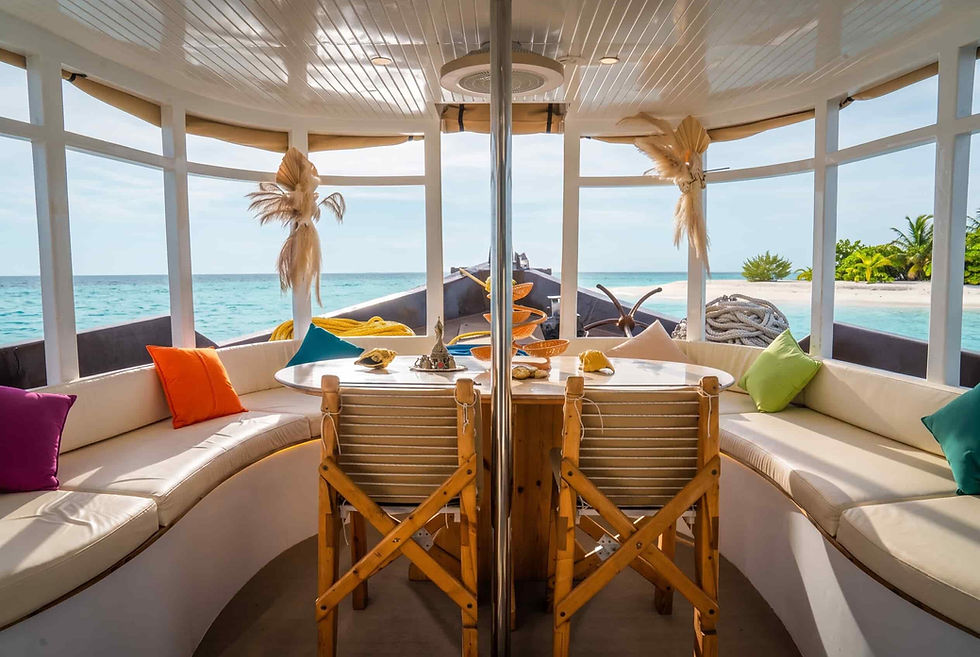
Between dives, yacht guests enjoy climate-controlled cabins, fresh meals, and comfortable lounging areas rather than crowded dive boat benches. Proper surface intervals become relaxing experiences with amenities rivaling luxury resorts. Photography enthusiasts appreciate dedicated spaces for camera maintenance and charging equipment.
The combination of all-inclusive vacation experiences with world-class diving creates comprehensive Maldives adventures. Non-diving companions can snorkel, explore islands, or relax aboard while divers pursue underwater activities.
Access to Remote and Exclusive Sites
Yacht range extends far beyond day-boat operations, accessing outer atolls and remote channels where marine life flourishes undisturbed. Some of the Maldives' most pristine reefs lie in atolls requiring overnight passages, making them practical only via yacht charter.
Remote sites typically offer superior visibility, healthier coral coverage, and larger marine species accustomed to minimal human presence. The investment in yacht-based diving pays dividends through exclusive access and uncrowded conditions that enhance every dive.
Safety Protocols and Best Practices
Atoll diving safety requires proper planning, equipment checks, and awareness of environmental conditions unique to Maldivian waters. Strong currents, depth variations, and marine life interactions demand respect and preparation.
Current Management and Drift Diving Techniques
Channel dives with strong currents require specific skills and safety measures. Divers maintain close group proximity, carry surface markers for deployment at safety stops, and establish clear communication signals before descending. Dive guides assess current strength and adjust entry points to ensure safe drift trajectories.
Essential current diving practices:
Begin dives upcurrent from intended exit points
Maintain neutral buoyancy to control depth in varying currents
Use reef structures for temporary holds when needed
Deploy surface markers during ascending to alert boat crews
Never fight strong currents by swimming against them
Boats follow diver bubbles and surface markers, positioning for pickup at drift endpoints. This coordination between dive teams and boat crews ensures safe retrieval even in challenging conditions.
Marine Life Interaction Guidelines
Responsible atoll diving includes respecting marine life and maintaining proper distances from animals. Whale sharks, manta rays, and other large species deserve space to behave naturally without harassment. Touching coral, chasing fish, or feeding marine life damages ecosystems and creates dangerous precedents.
Conservation-minded divers follow established guidelines: maintain three-meter distances from mantas and whale sharks, avoid flash photography near sensitive species, and never remove anything from the reef. These practices preserve the underwater environments that make atoll diving exceptional.
Health Considerations for Repetitive Diving
Multi-day diving schedules from yacht charters require conservative dive planning to minimize decompression illness risk. Using nitrox, taking surface intervals longer than minimum requirements, and ascending slowly with safety stops all reduce nitrogen loading during repetitive dives.
Staying hydrated, avoiding alcohol before diving, and getting adequate rest between dive days maintain physical readiness. Divers should monitor themselves for unusual fatigue, tingling sensations, or other warning signs, reporting concerns immediately to dive guides.
Photography and Documentation
Underwater photography captures the spectacular biodiversity and unique encounters that define atoll diving experiences. From wide-angle reef panoramas to macro shots of cryptic species, Maldivian waters offer unlimited photographic opportunities.
Camera Systems and Housing Options
Modern underwater photography ranges from action cameras in simple housings to professional DSLR systems with multiple strobes. Beginners often start with compact cameras or smartphones in waterproof cases, while serious photographers invest in dedicated underwater housings matched to specific camera models.
Lighting becomes critical below 10 meters as natural colors fade with depth. Strobes or video lights restore vibrant hues and provide proper exposure in darker environments like caves and overhangs. Many yacht charters offer charging stations and camera rinse tanks to support photography equipment.
Composition Techniques for Marine Subjects
Successful underwater photography requires different techniques than land-based shooting. Getting close to subjects improves image clarity by minimizing water between camera and subject. Shooting slightly upward creates dramatic perspectives with surface light as background.
Photography improvement tips:
Practice buoyancy control to maintain stable shooting positions
Understand strobe positioning to avoid backscatter
Approach marine life slowly and respectfully
Capture behavioral moments rather than static portraits
Review images between dives to adjust techniques
Dedicated photo dives with patient dive guides allow photographers to work methodically rather than keeping pace with general recreational diving groups. This focused approach produces superior results and higher satisfaction.
Sharing and Conservation Impact
Sharing compelling underwater images raises awareness about marine conservation and Maldivian ecosystem importance. Social media posts, blog articles, and photo competitions highlight the beauty worth protecting. Many divers contribute images to marine life identification databases, supporting scientific research and species monitoring programs.
Quality photography also documents environmental changes over time, providing baseline data for reef health assessments. Responsible photographers balance documentation goals with minimal environmental impact, never damaging coral or disturbing marine life for photographs.
Atoll diving in the Maldives combines world-class marine biodiversity with exceptional underwater landscapes, creating unforgettable experiences for divers of all levels. From gentle lagoon explorations to adrenaline-filled channel drifts, the variety ensures every dive reveals something new. Atoll Villa provides the perfect platform for your diving adventure, offering luxury yacht charters that access remote sites while delivering comfort and flexibility throughout your journey. Experience the freedom of exploring pristine atolls at your own pace, diving when conditions are optimal, and creating memories that last a lifetime.


Comments